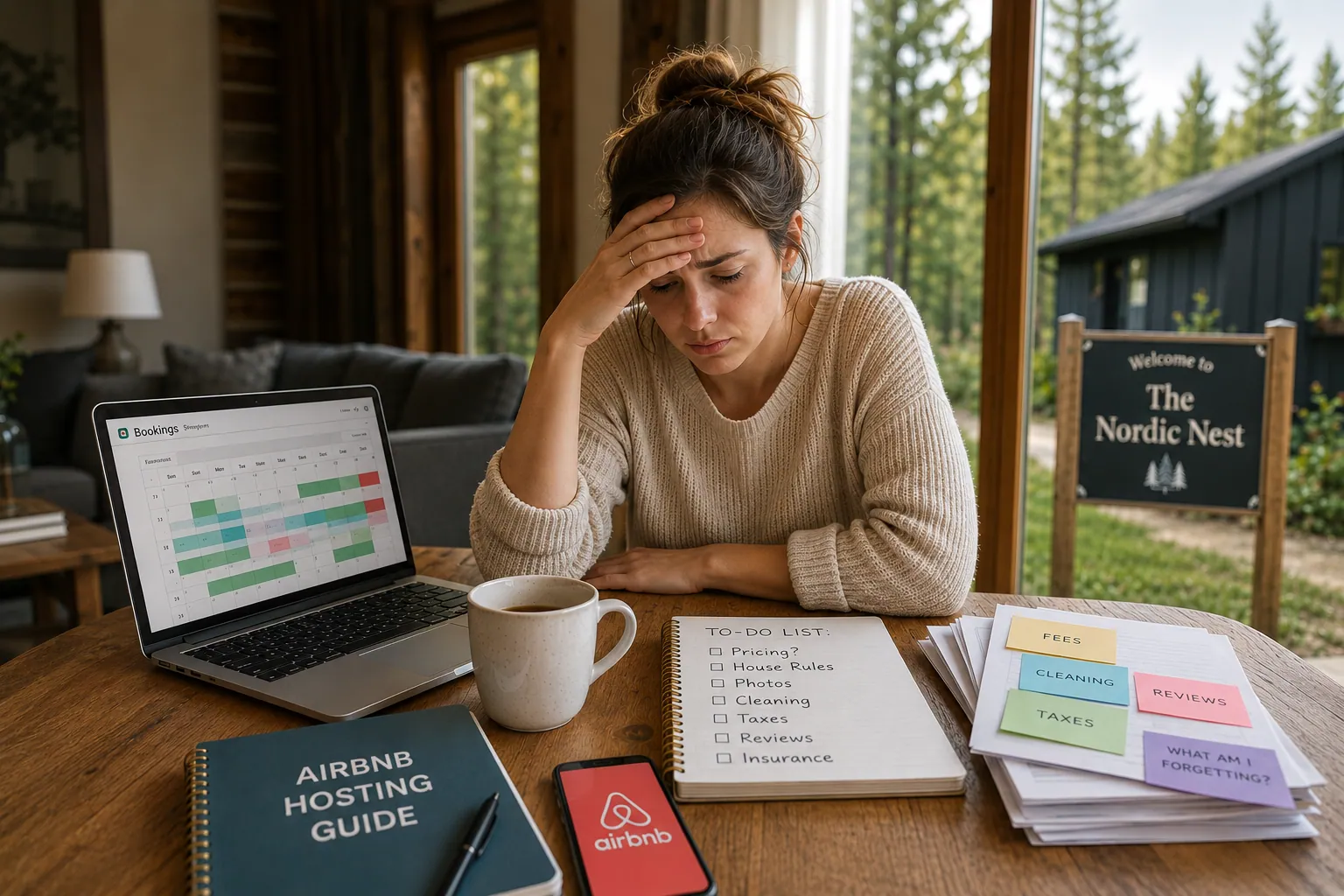


Thinking about starting a short-term rental? It can be an exciting venture, but there’s a lot more to it than putting some furniture in a house, taking pictures, and listing it on Airbnb.
We know because we’ve been there.
Between the two of us, we’ve purchased and renovated properties, converted a primary residence into a vacation rental, built an accessory dwelling unit (ADU), and rented out part of our own homes. We’ve also managed properties from hundreds of miles away.
Some things we got right from the beginning. Others? Well, let’s just say we’ve learned a few lessons the hard way.
One of the biggest things we’ve learned is that the work you do before your first guest arrives can make a tremendous difference in how successful your rental becomes.
That’s why we put together this startup checklist. Whether you’re thinking about renting a spare room, converting a property you already own, or purchasing your first investment property, these are the things we’d encourage you to think through before opening your doors.
And if you’d rather have a printable checklist to work from, we’ve included a free download at the end.
1. First, Decide if Hosting Is Right for You
Before you start shopping for furniture or looking at properties, ask yourself whether you really want to be in the hospitality business.
Short-term rentals can be a wonderful source of income, but they aren’t completely passive. Guests have questions, things break, cleaners get sick, and occasionally you’ll get a message about something you never imagined could be a problem. We’ve certainly had our share of those!
Here are a few questions worth asking yourself:
You don’t have to do everything yourself. In fact, we wouldn’t recommend it. But somebody needs to be responsible for each part of the operation.
One more thing to consider: What’s your exit strategy?
If short-term rentals stop making financial sense, could you turn the property into a long-term rental? Use it as a second home? Sell it without taking a big loss?
We like having options, and we think you should, too.
2. Do Your Market Research Before Spending Money
Just because a property is beautiful doesn’t mean it will be a successful short-term rental.
You need to understand why people would want to stay there.
Most people immediately think of beaches, mountains, lakes, and popular vacation destinations. But we’ve learned that plenty of less obvious locations can make good rental markets.
Think about what’s bringing visitors to the area:
Then spend some time on Airbnb and Vrbo looking at your competition.
What are similar properties charging? What amenities do they offer? How well booked do their calendars appear to be? What makes certain listings stand out?
And here’s one of our favorite research tips: Read the three- and four-star reviews, not just the five-star reviews.
That’s often where you’ll find the most useful information.
Guests will tell you when beds are uncomfortable, kitchens aren’t well stocked, Wi-Fi is unreliable, or check-in instructions are confusing.
Those complaints are valuable because they tell you what you can do better.
3. Make Sure Short-Term Rentals Are Allowed
This is one step you absolutely don’t want to skip. Before you purchase a property or invest money getting one ready, make sure you can legally operate a short-term rental. Rules vary from one community to another, sometimes dramatically. Check with your city, county, and homeowners association, if applicable.
You’ll want to understand:
Don’t assume that because your neighbor has an Airbnb, you’re allowed to have one, too.
We’ve learned that regulations can change, so this isn’t something you check once and forget about.
4. Run the Numbers—and Be Conservative
It’s easy to get excited about what a property might earn. But projected rental income and actual profit are two very different things. Start by estimating your average nightly rate and how many nights you realistically expect to book.
Average Nightly Rate × Occupied Nights = Projected Rental Revenue
Then start subtracting expenses.
And there are plenty of them:
Don’t forget to leave some money for the unexpected. We’ve learned the hard way – things don’t always break when you have money in the bank.
We always encourage new hosts to be conservative with their projections. If the numbers only work when the property is booked almost every night and nothing ever breaks, that’s a warning sign. You want a business that can weather slower months and an occasional surprise expense.
5. Get the Business Side Organized
Once you’ve decided to move forward, it’s time to get organized. Depending on your situation, that may include:
Not everyone needs an LLC or a complicated business structure. Renting a room in your home is quite different from purchasing several investment properties.
Talk with a qualified accountant or attorney about what makes sense for your situation. But here’s something we’d recommend regardless of how small you start: Keep your rental finances separate from your personal finances. It will make your life much easier when tax time rolls around.
6. Don’t Overlook Insurance
Insurance isn’t nearly as exciting as decorating your rental, but it’s a lot more important. Your regular homeowner’s insurance may not provide adequate coverage when you’re renting your property to paying guests. Talk with your insurance agent and explain exactly how you plan to use the property.
Ask about coverage for:
Airbnb and Vrbo offer certain protections, but we wouldn’t rely on those alone. You’ve invested a lot in your property. Make sure it’s properly protected.
7. Get Your Property Ready for Guests
Now we get to the fun part!
Whether you’re renovating an entire house or preparing a guest suite, try looking at the property through the eyes of someone who’s never been there.
Walk through it and ask yourself:
It’s amazing how many little things you notice when you stop looking at a property as the owner and start looking at it as a guest.
Start With Safety
Before worrying about decorations, make sure you’ve addressed the basics:
If you have a pool, hot tub, fireplace, sauna, grill, gym, or fire pit, think through the additional safety and maintenance requirements.
A beautiful property is wonderful. A safe property is essential.
8. Furnish for Guests, Not Just Your Own Taste
This is one area where it’s easy to overspend. You want your rental to look inviting, but remember that everything will get used, and some things will get used a lot.
We believe in spending money where it matters most:
Choose furniture that looks good but can stand up to repeated use. That delicate white chair you love might not be the best choice if it needs special cleaning every time someone sits in it.
We also try to avoid anything that requires complicated instructions. Guests are on vacation. They shouldn’t need a tutorial to operate the furniture.
9. Stock the Kitchen Without Going Overboard
It’s surprising how quickly kitchen expenses add up.
You start with pots and pans, dishes, glasses, silverware, and a coffee maker. Before you know it, you’re buying baking sheets, cutting boards, serving bowls, measuring cups, storage containers, and a dozen other things.
Our advice is to stock the kitchen based on the number of guests your property accommodates. If your house sleeps eight, make sure eight people can comfortably prepare and enjoy a meal together. That means enough dishes, silverware, glasses, mugs, cookware, and seating.
At the same time, you don’t need every kitchen gadget ever invented. We prefer practical, durable items that are easy to use and easy for cleaners to maintain. A complicated appliance that takes 20 minutes to clean probably isn’t doing anyone any favors.
10. Choose Amenities That Make Sense for Your Guests
One of the easiest ways to spend too much money is trying to offer every amenity imaginable. More isn’t always better. Think about your property, its location, and the people most likely to book it.
Depending on your market, guests might appreciate:
Look at successful rentals in your area and see what guests value. But don’t feel like you have to copy everything your competitors offer. Sometimes what makes your property successful is offering something different.
11. Find a Reliable Cleaning and Maintenance Team
We can’t emphasize this enough: Your cleaning team is one of the most important parts of your short-term rental business.
A wonderful guest experience can be ruined pretty quickly by a property that wasn’t cleaned properly. Your cleaner is often the last person inside the property before your next guests arrive. That’s a big responsibility.
Before you start accepting reservations, establish:
You also need dependable people to call when something breaks. Think plumbing, HVAC, electrical work, appliance repairs, lawn care, snow removal, and pest control. And don’t forget emergency lockouts!
If you’re managing remotely, having reliable people nearby becomes even more important. Build those relationships before you need them. Finding a plumber at 10 p.m. on a Saturday isn’t nearly as much fun as it sounds.
12. Put Technology to Work for You
Technology has made managing short-term rentals much easier, especially when you aren’t living near the property. But that doesn’t mean you need to purchase every app or subscription available. Start with the tools that solve actual problems.
Depending on your needs, consider:
We’ve found that a few well-chosen tools can save a tremendous amount of time. Just don’t put everything on autopilot and forget about it. Technology is there to help you run your business, not replace good judgment or personal attention to your guests.
13. Establish Clear House Rules
We believe house rules are important, but they shouldn’t make guests feel like they’re attending summer camp. Keep them reasonable, easy to understand, and focused on protecting your property and providing a good experience.
Consider rules covering:
One lesson we’ve learned is that it’s much easier to prevent a misunderstanding than to resolve one after guests arrive. If something is important, make sure guests know about it before they book. Clear expectations are good for everyone.
14. Think Strategically About Pricing
Pricing is one of the most important decisions you’ll make as a host. It’s also something you should expect to adjust regularly. Don’t just look at a few nearby properties, choose a nightly rate, and leave it there all year.
Think about:
We’ve found that pricing requires ongoing attention. Dynamic pricing software can be helpful, but you still need to understand your market and review what the software is recommending.
And don’t forget that occupancy isn’t everything. Filling every available night doesn’t necessarily mean you’re maximizing your profit.
15. Create a Listing That Gives Guests Confidence
Your Airbnb or Vrbo listing needs to accomplish two things: catch someone’s attention and give them enough information to feel comfortable booking.
We think professional-quality photographs are one of the best investments you can make. But good pictures are only part of the equation.
Your listing should clearly explain:
And here’s something we feel strongly about: Be honest about your property. If there’s a steep driveway, stairs, limited cell service, road noise, or a gravel road that’s difficult in winter, tell guests. You may lose a booking or two, but you’ll also avoid disappointing guests who discover those things after arriving.
We’d much rather have the right guests book our property than have someone arrive with unrealistic expectations.
16. Prepare Your Guest Messages Before You Need Them
Good communication makes hosting easier for everyone. Rather than writing every message from scratch, prepare your basic guest communications before you start taking reservations.
We recommend having messages ready for:
Most booking platforms allow you to automate at least some of these messages. That’s a great time-saver, but here’s our advice: Make sure your automated messages still sound like they’re coming from a real person. Guests appreciate clear information, but they also want to know there’s someone available if they need help.
17. Spend a Night in Your Own Rental
This is one of our favorite recommendations. Before welcoming your first paying guest, stay overnight in the property yourself. And don’t just sleep there. Actually use the place. Cook dinner. Take a shower. Watch television. Connect to the Wi-Fi. Make coffee. Sleep in the bed.
You’ll be surprised what you discover. Maybe the bedside lamp is too far away to reach. There’s no good place to hang a wet towel. The bedroom gets too bright in the morning. The frying pan sticks. Or the Wi-Fi password is impossible to find.
These are exactly the kinds of things guests notice. It’s much better to discover and fix them yourself than read about them later in a review.
18. Do One Final Walk-Through
Before you open your calendar for reservations, go through the entire property one more time.
Check everything:
Then go outside and approach the property as if you’re arriving for the first time.
Can you see the address? Is parking obvious? Can you find the entrance? Is there enough lighting after dark? Can you use the door lock without help?
If something doesn’t work smoothly, now’s the time to fix it.
One Last Piece of Advice: Don’t Wait for Everything to Be Perfect
If there’s one thing we’d like new hosts to remember, it’s this: You don’t have to have everything figured out before welcoming your first guest.
We certainly didn’t.
Over the years, we’ve changed amenities, replaced furniture, adjusted pricing, rewritten instructions, improved cleaning procedures, and changed how we communicate with guests. Some of those changes came from guest suggestions. Others came from things we learned the hard way.
And we’re still learning.
The goal isn’t to create a perfect property on day one. It’s to start with a safe, clean, comfortable, well-prepared rental, take good care of your guests, and pay attention to what you can improve.
That’s what good hosting is all about.
Download Our Free Short-Term Rental Startup Checklist
There’s a lot to think about when starting a short-term rental, and it’s easy to overlook something.
We’ve taken the steps in this article and created a free printable Short-Term Rental Startup Checklist to help you stay organized.
From market research and permits to furnishing, safety, cleaning, pricing, and getting ready for your first guest, you’ll have one place to keep track of your progress.
FREE DOWNLOAD
Short-Term Rental Startup Checklist for Beginners
From idea to first guest—everything you need to get your rental ready.
[DOWNLOAD THE FREE CHECKLIST]
Print it out, keep it with your planning materials, and check things off as you go.
And if you’re looking for more guidance, our book, Booked Solid: A Beginner’s Guide to Short-Term Rental Success, walks you through the entire process in greater detail.
We’ve included what we’ve learned from our own properties—the good decisions, the mistakes, and plenty of things we wish we’d known when we started.
Our hope is that sharing those experiences will help you start your own hosting journey with a little more confidence and a few fewer surprises.
Joan Friedenfels & Jean Adair
Co-authors of Booked Solid: A Beginner’s Guide to Short-Term Rental Success
Category :
Share :