One of the questions we’re asked most often is, “Do you think this property would make a good Airbnb?”
It’s a fair question, but the answer has a lot less to do with how much you love the house and a lot more to do with the market around it.
It’s easy to fall for a property. We’ve done it ourselves. You walk into a charming farmhouse or a cozy cabin, and immediately picture guests gathered around the fire pit, drinking coffee on the deck, or spending a long weekend with family and friends.
But we’ve learned something important along the way: A great house doesn’t always make a great short-term rental.
Before you get too attached to a property, make sure the demand, numbers, regulations, and guest experience all make sense.
Before spending your weekends touring properties, spend some time researching the area.
Why do people visit? Who comes—and when? Is there year-round demand, or does the area depend heavily on one season? Are people coming for the beach, a national park, college events, weddings, wineries, business, or simply a weekend away?
Then look at the types of properties guests are booking.
A family heading to the lake may be looking for multiple bedrooms, a big kitchen, and plenty of outdoor space. A couple visiting wine country may care more about privacy, a beautiful view, and a great place to sit outside with a glass of wine.
The better you understand your future guests, the easier it becomes to recognize a property that will appeal to them.
You can learn a lot by looking at successful rentals in the area.
Spend some time on Airbnb and Vrbo and pay attention to more than the nightly rate. Read the reviews. Look at the photos and amenities. Notice which properties have built up a large number of reviews and what guests repeatedly mention about their stays.
Look for patterns. Are guests drawn to mountain views? Walkability? Waterfront access? Large gathering spaces? Pet-friendly properties? Fire pits and hot tubs?
Then ask yourself an important question: What could my property offer that would make someone choose it over the others?
The goal isn’t to copy another host. It’s to understand what guests already value—and whether there’s an opportunity to offer something better or different.
When you tour a potential rental, try to stop thinking like a homebuyer and imagine arriving as a guest.
You’ve driven four hours. Maybe it’s dark. You’re tired. The kids are hungry. What happens next?
Is the property easy to find? Is parking simple? Is there a comfortable place for everyone to gather? Are the bedrooms and bathrooms well laid out? Is there an outdoor space people will actually use?
And what makes you excited to be there?
Maybe it’s the mountain view from the deck, a path to the beach, a big backyard, or a fireplace everyone can gather around at the end of the day.
Square footage matters, but guests don’t book square footage. They book the experience they imagine having there.
Paint can be changed. Furniture can be replaced. An outdated kitchen can be renovated.
Location is much harder to fix.
Pay attention to the things you can’t easily change: the neighborhood, views, traffic, noise, parking, floor plan, accessibility, outdoor space, and proximity to the places your guests are coming to visit.
A dated property in a great location may have far more potential than a beautifully renovated house where travelers don’t want to stay.
Before ruling out an ugly bathroom or dated cabinets, ask yourself whether you’re looking at something that’s fixable—or something you’ll be stuck with.
It’s easy to make the numbers work on paper when you really want a property.
Resist the temptation.
Estimate your potential rental income conservatively and then account for the expenses that come with operating a short-term rental. That includes your mortgage, property taxes, insurance, utilities, internet, cleaning, maintenance, supplies, platform fees, furnishings, repairs, and management costs if you won’t be managing it yourself.
Don’t assume you’ll be booked every night or that you’ll always get your highest seasonal rate.
Run the numbers for a good year—and then see what happens if occupancy or rates are lower than expected.
A property needs to make financial sense even after the excitement of buying it wears off.
This is one step you never want to skip.
Before making an offer, find out whether short-term rentals are actually allowed. Check local zoning and STR ordinances, licensing requirements, occupancy limits, parking rules, and any other restrictions that could affect how you operate.
If the property is part of a homeowners association, read the actual governing documents rather than relying on what a seller or real estate agent tells you.
Rules can change, but you want to understand exactly what you’re buying into before you close.
The perfect rental isn’t much of an investment if you can’t rent it.
Some houses work better as short-term rentals than others.
Think about how people will actually use the space. If the property sleeps eight, can eight people comfortably sit in the living room? Can they eat together? Is there enough parking? Are there enough bathrooms? Is the kitchen large enough to prepare a family meal?
Look at the less obvious things too. Is there somewhere to put luggage? Are there outlets near the beds? Is the outdoor area easy to access? Will guests have privacy?
These details may not seem important during a showing, but they can make a big difference once you’re hosting.
There’s always a new type of rental getting attention online—tiny homes, treehouses, domes, shipping containers, themed properties, and whatever comes next.
Unique properties can be very successful. But unusual doesn’t automatically mean profitable.
Before investing in something because it looks great on social media, make sure there’s enough demand for it in your market and that the numbers work.
Sometimes the best investment isn’t the property everyone wants to photograph. It’s the one travelers consistently want to book.
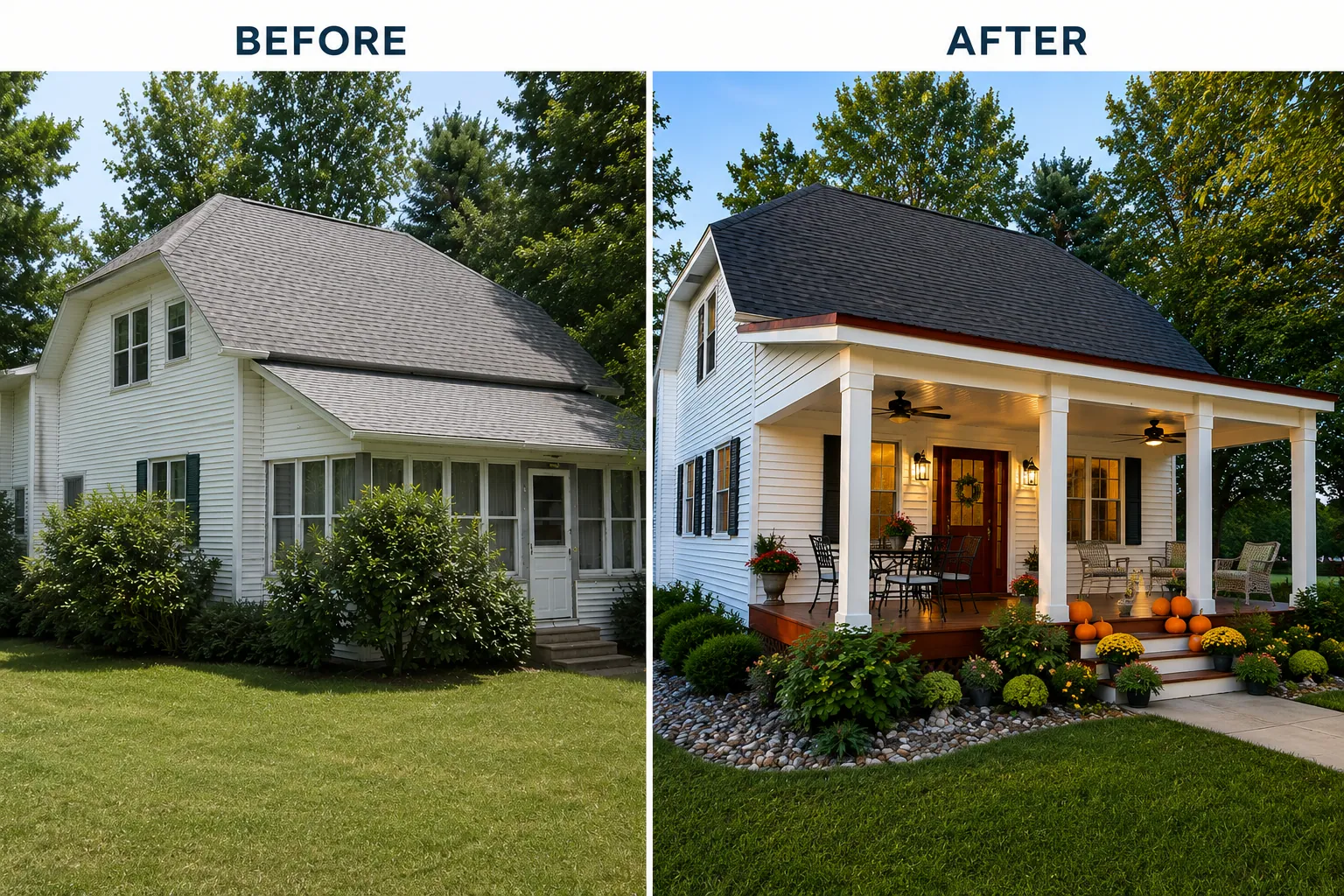
Our first short-term rental was a 1915 farmhouse that had definitely seen better days. It needed a complete renovation, and we learned plenty along the way.
What the farmhouse did have was character, space, privacy, and a setting that gave guests a reason to choose it. Once the renovation was complete, it became a successful rental and, when we eventually sold it, a very good investment.
Since then, we’ve hosted in very different types of properties. We’ve built a home with a dedicated rental wing, turned an ADU into a successful short-term rental, and converted a primary residence into a luxury mountain retreat.
None of those properties looked the same, and they didn’t attract the same guests.
That’s one of the most important lessons we’ve learned: There isn’t one type of property that makes a successful short-term rental. The property has to make sense for the market and the guests you want to attract.
A beautiful house can still be a bad investment, and a property you might initially overlook can turn out to have tremendous potential.
Before you buy, make sure you can answer a few basic questions:
If those answers make sense, you may have found a great opportunity.
And if they don’t, be willing to walk away. There will always be another house.
Finding the right property is one of the biggest decisions you’ll make as a host. Take your time, do the research, and don’t let a beautiful kitchen—or a great view—talk you into ignoring the numbers. In Booked Solid, we take a deeper look at market research, property selection, startup costs, income potential, and the features that can help a rental stand out. Our goal is simple: to help you make a smart decision before you invest your
Category :
Share :