
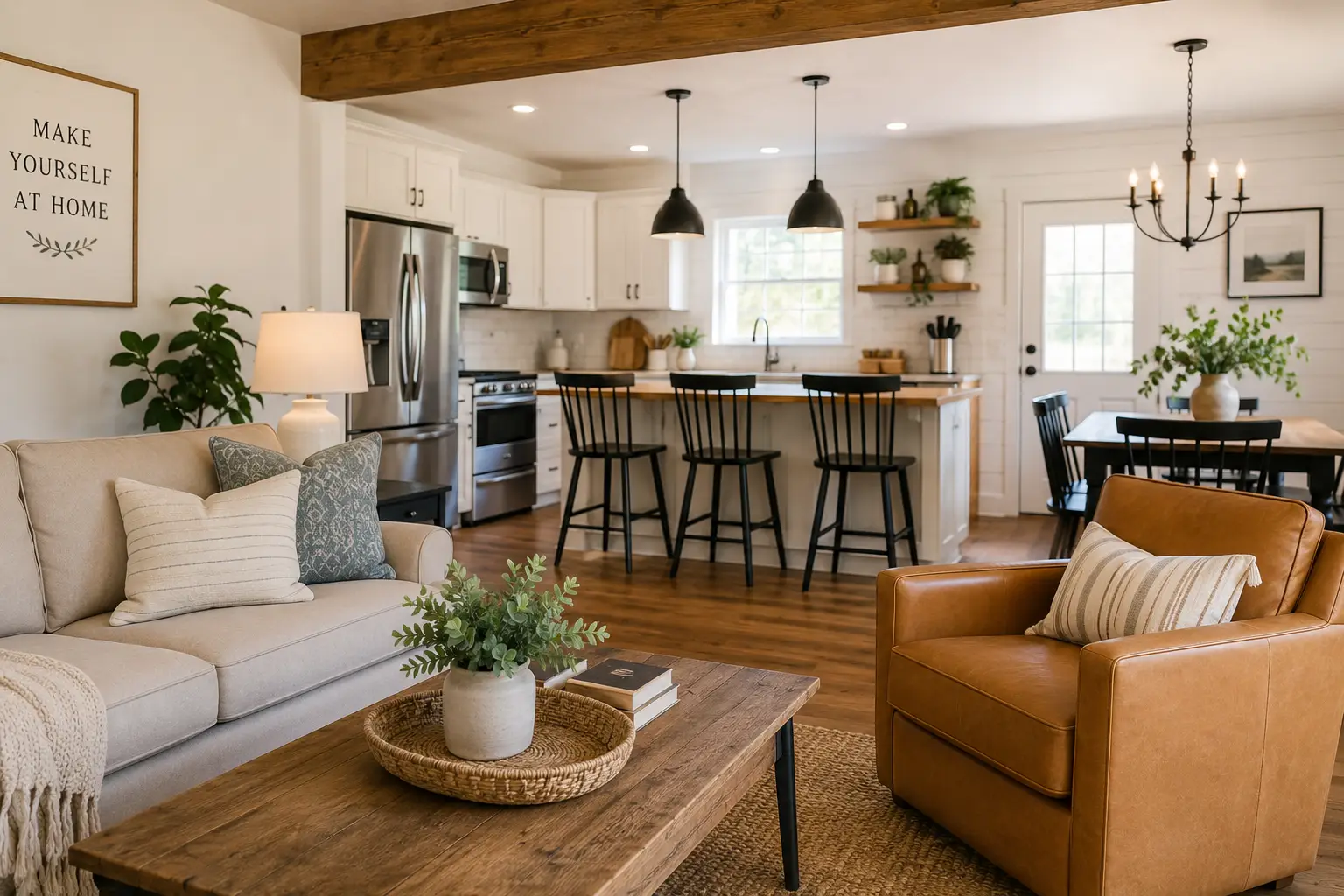
One of the first questions new hosts ask is, “How much money do I need to start a short-term rental?”
The answer, of course, is that it depends.
We know. Not very helpful.
The truth is that startup costs can vary tremendously depending on whether you’re renting a room in your home, converting an existing property, building an ADU, or purchasing and renovating an investment property.
But one thing is fairly consistent: It usually costs more to get a short-term rental ready than first-time hosts expect.
We’ve learned this firsthand. It’s easy to budget for the big things—the property, renovation, and furniture. It’s all the smaller purchases that can quietly push your budget higher.
So before you start ordering throw pillows and coffee mugs, let’s look at what it really takes to get a property ready for paying guests.
There isn’t one magic startup number because hosts begin in very different places.
If you’re converting a furnished second home, you may already own much of what you need. If you’re starting with an empty house, you’ll need to furnish and equip nearly every room. And if you’re buying a fixer-upper, renovation costs can easily become your largest expense.
That’s why we recommend separating your budget into three categories:
Don’t lump everything into one number. Breaking it down makes it much easier to see where your money is actually going.
You don’t need to furnish your rental like a luxury hotel, but you do need comfortable, durable furniture that will hold up to repeated use.
For a typical two- or three-bedroom property, you may need:
Depending on the size of the property and the quality you choose, furnishing an empty home can easily run into several thousand dollars.
Our advice? Spend more where guests spend their time.
A good mattress matters. A comfortable sofa matters. Sturdy dining chairs matter.
The decorative table in the hallway? Probably not as much.
The kitchen is one of those rooms where small purchases multiply quickly.
Start adding up pots and pans, dishes, silverware, glasses, coffee mugs, knives, cutting boards, baking sheets, mixing bowls, utensils, a toaster, coffee maker, wine opener, can opener, and food storage containers—and suddenly you’ve spent far more than expected.
And if your property sleeps eight, don’t stock the kitchen for four. Guests shouldn’t have to wash a coffee cup because you only provided four mugs in a house that sleeps eight.
When choosing kitchen items, keep things simple, durable, and easy to clean. Avoid anything that requires special instructions or extra care. If your pans can only be used with non-metal utensils, they’re probably not a good choice for a rental. The same goes for dishes that can’t go in the dishwasher or glassware that’s particularly fragile. Guests won’t always read—or remember—special instructions, and you don’t want to spend your time replacing damaged items.
Also think about your cleaning crew. Some appliances sound like great amenities but create more work between guests. A waffle maker, for example, can take far longer to clean properly than a toaster. Before adding another kitchen gadget, ask yourself how often guests will actually use it and how much time it will add to every turnover.
Think about how your guests are likely to use the property. A weekend rental for couples may need a different kitchen setup than a large mountain home where families prepare most of their meals.
Our rule is simple: if it’s difficult to use, easy to damage, or a headache to clean, it probably doesn’t belong in a short-term rental.
Beds need more than sheets.
You’ll need pillows, mattress protectors, pillow protectors, blankets or comforters, and backup linens. Bathrooms need bath towels, hand towels, washcloths, bath mats, and extras.
We strongly recommend having backup sets available. A stained sheet discovered during a same-day turnover isn’t the time to realize you don’t have another one.
Buy quality that can handle frequent washing, but don’t assume the most expensive linens are necessarily the best choice for a rental.
Comfort, durability, and easy replacement matter more than the name on the label.
This isn’t the place to cut corners.
Depending on your property and local requirements, you may need smoke detectors, carbon monoxide detectors, fire extinguishers, a fire blanket, first-aid supplies, exterior lighting, secure railings, pool or hot tub safety equipment, and a smart lock or other reliable entry system.
You may also discover repairs that weren’t obvious when you purchased the property—a loose deck railing, uneven walkway, exterior steps that need better lighting, or a door that doesn’t lock properly.
Take care of those things before guests arrive.
A beautiful property isn’t guest-ready if it isn’t safe.
At a minimum, most guests expect reliable Wi-Fi.
You may also want smart TVs or streaming devices, a smart lock, a smart thermostat, exterior security cameras where permitted, and noise-monitoring devices for certain properties.
Then there are optional business tools for pricing, bookkeeping, guest communication, cleaning coordination, and property management.
You don’t need every piece of software available on day one.
Start with what solves an actual problem. You can add more technology as your business grows.
This is one expense we don’t recommend skipping.
You can spend thousands creating a beautiful property, but if your listing photos don’t show it well, potential guests may scroll right past it.
Professional photography is part of your marketing budget—not an afterthought.
Before the photographer arrives, make sure the property is completely finished, cleaned, staged, and ready for guests. There’s no sense paying for professional photographs and then replacing half the furniture two weeks later.
This is where budgets often get off track.
Individually, these purchases may not seem like much. Together, they can add up quickly:
And then there are the things you realize you need only after spending a night in the property yourself.
That’s one reason we recommend staying in your rental before your first guest does.
You’ll quickly discover that the bedroom needs another lamp, there’s nowhere to hang a wet towel, or the kitchen somehow has six spatulas but no can opener.
Before accepting your first reservation, you may also have costs associated with setting up and protecting the business itself.
Depending on your location and situation, these could include permits or licenses, inspections, business registration, insurance, accounting or legal help, and local taxes or fees.
You’ll also want to understand the fees charged by the booking platforms you plan to use.
Research these expenses before you finalize your startup budget. Some locations make getting started relatively simple, while others require permits, inspections, or substantial licensing fees.
For a typical two- or three-bedroom home, a realistic starting budget might look something like this:
| Category | Example Budget |
| Furniture & mattresses | $7,000–$15,000+ |
| Kitchen setup | $1,000–$2,000 |
| Linens, towels & bedding | $1,000–$2,000 |
| Décor, lamps & finishing touches | $750–$2,000 |
| Outdoor furniture & amenities | $1,000–$4,000+ |
| Safety & security | $500–$1,500 |
| TVs, smart lock & technology | $750–$2,000 |
| Professional photography | $300–$800+ |
| Initial household & guest supplies | $500–$1,000 |
| Permits, licensing & business setup | Varies by location |
| Estimated Setup Total | $12,800–$30,300+ |
These numbers don’t include the purchase price of the property, closing costs, major renovations, appliances that need replacing, or ongoing operating expenses. They’re simply a starting point for turning an empty house into a furnished, equipped, guest-ready short-term rental.
You can certainly spend less. Shopping sales, repurposing quality furniture you already own, and buying some items secondhand can make a big difference. On the other hand, a larger home, luxury property, or rental with extensive outdoor spaces and amenities can easily push the setup cost well beyond $30,000.
After setting up several different rentals, we’ve learned there are some things worth spending a little more on. Comfortable mattresses, good pillows, durable furniture, quality linens and towels, reliable Wi-Fi, safety equipment, a dependable entry system, and professional photography are high on our list.
These are the things guests use, notice, and often mention in their reviews.
On the other hand, you don’t need to spend a fortune on trendy décor, expensive artwork, designer dishes, elaborate welcome gifts, or gadgets that look impressive but rarely get used. We’d rather put a $50 lamp next to the bed where a guest actually needs it than spend $500 on artwork they may barely notice.
Durability matters, too. Short-term rental furniture, linens, dishes, and household items get a lot of use. You don’t need commercial-grade everything, but buying the cheapest option can cost more in the long run if you’re constantly replacing it. Look for good quality at a reasonable price and choose items you can easily replace when needed.
We also believe simple is usually better, especially with appliances and technology. Choose TVs, coffee makers, thermostats, grills, kitchen appliances, and other equipment that guests can easily figure out. The latest model with twenty different settings may sound impressive, but it’s not much of an amenity if guests can’t figure out how to use it.
Before buying something, ask yourself: Could a guest who’s never seen this before use it without calling me for help? If the answer is no, we’d probably choose something simpler.
Finally, don’t spend every dollar of your startup budget before you open. Keep some money in reserve for the things you didn’t anticipate—a repair, an extra piece of furniture, better Wi-Fi equipment, or something you realize you need after your first few guests.
The best purchases aren’t necessarily the most expensive ones. They’re the ones that make your property more comfortable, easier to use, and easier to operate.
Whatever number you arrive at, don’t make it your absolute maximum.
Something will cost more than expected.
You may discover that the Wi-Fi doesn’t reach the back bedroom. A mattress doesn’t fit the bed frame. The deck needs a repair. You need additional parking. Your insurance costs more than the original estimate.
Consider setting aside 10% to 20% of your setup budget for unexpected expenses rather than spending every dollar before you open.
If you don’t use it, wonderful. But you’ll be glad it’s there if you need it.
We’ve started short-term rentals in very different ways, and each required a different budget.
Our first farmhouse needed a complete renovation before it could ever welcome guests. Other properties started with good bones and needed more attention to furnishing, amenities, and creating the right guest experience. With our ADU, we had the advantage of designing the space with guests in mind from the beginning.
One lesson has been consistent: The little things add up faster than you expect.
It’s rarely one big purchase that surprises you. It’s the steady stream of $20, $50, and $100 purchases during those final weeks before opening.
We’ve also learned that spending more doesn’t automatically create a better rental. Some of the things guests appreciate most are relatively inexpensive—good lighting beside the bed, plenty of hooks, extra towels, a well-stocked kitchen, clear instructions, and a comfortable place to sit outside.
Spend where it matters and don’t feel like you have to buy everything at once.
Before furnishing your rental, walk through every room and make a list of what you’ll need. Then attach a realistic price to each item. Once you have your total, add a contingency fund and ask yourself one final question:
Can I comfortably afford to get this property completely guest-ready without depending on immediate bookings to pay the bills?
If the answer is no, it may be worth waiting, reducing the scope, or finding a property that requires less upfront investment.
A successful short-term rental doesn’t begin with filling an online shopping cart. It begins with a realistic budget and a clear understanding of where your money will make the biggest difference.
In Booked Solid, we walk through budgeting, property preparation, furnishings, amenities, and the other decisions that come before your first guest arrives. And if you’re already preparing a property, download our Preparing Your Property Checklist to make sure the important details don’t get overlooked.
Category :
Share :